
Liposomal Magnesium Citrate 500mg
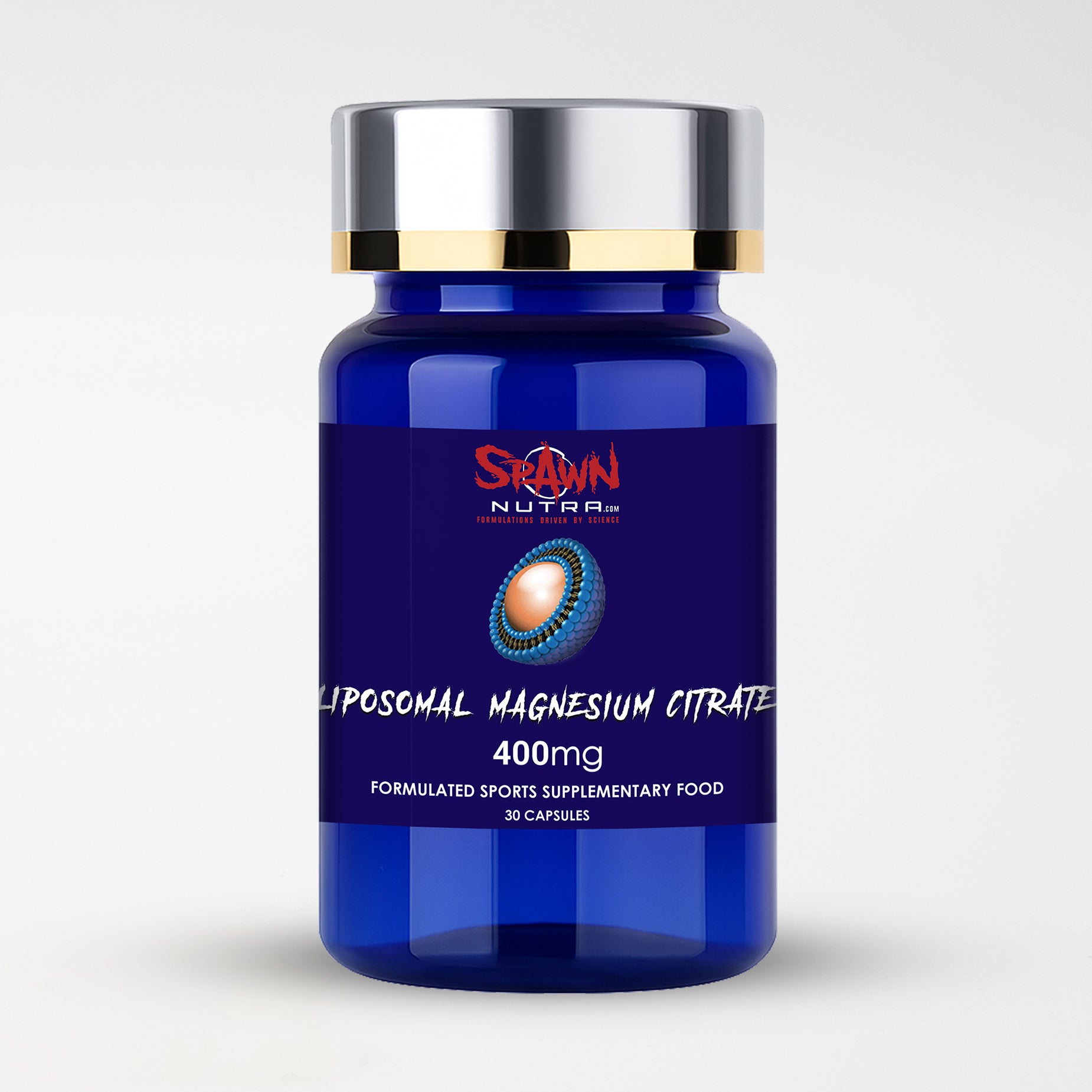
Liposomal Magnesium Citrate 500mg
LIPOSOMAL MAGNESIUM CITRATE 500MG
The Mineral That Runs 300+ Reactions. Most People Are Deficient.
WHAT IS MAGNESIUM?
Magnesium is the fourth most abundant mineral in the human body and is required as a cofactor in over 300 enzymatic reactions — including every reaction that creates, uses, or stores ATP. Not some ATP reactions. Every single one. ATP exists in cells almost exclusively as Mg-ATP2−, a complex of ATP bound to a magnesium ion. Without magnesium, ATP is functionally unavailable, regardless of how much the mitochondria produce. This is why magnesium deficiency presents as fatigue, muscle weakness, impaired exercise capacity, and cognitive fog — the same symptoms as energy depletion — even when mitochondrial function is intact.
The global burden of magnesium deficiency is underappreciated by clinical medicine because serum magnesium (the standard lab test) is a profoundly unreliable biomarker. The body maintains serum magnesium within a very narrow range by drawing from intracellular stores and bone — meaning serum magnesium only falls when whole-body depletion is advanced. Estimates of subclinical magnesium insufficiency in Western populations range from 56–68% of adults, driven by soil depletion, food processing, and high dietary phosphate interfering with absorption.
THE MOLECULAR MECHANISMS
ATP Synthesis and Utilisation
Phosphoryl group transfer reactions — the fundamental chemistry of energy metabolism — are catalysed by kinases that use Mg-ATP as substrate. This includes hexokinase (glycolysis step 1), phosphofructokinase-1 (the rate-limiting step of glycolysis), pyruvate kinase, and all 10 kinases in the TCA cycle. ATP synthase itself requires magnesium for gamma-subunit rotation and ADP phosphorylation. There is no energy metabolism without magnesium. None.
Neuromuscular Function and Calcium Antagonism
Magnesium is a physiological calcium channel antagonist — it competes with calcium for entry through voltage-gated calcium channels and NMDA receptors. At the neuromuscular junction, the balance between calcium (which drives muscle contraction) and magnesium (which promotes relaxation and reduces channel sensitivity) determines resting muscle tone, fasciculation threshold, and susceptibility to cramp. Magnesium depletion tips this balance toward calcium dominance — resulting in increased excitability, spontaneous muscle contractions, and cramps. This is the biochemical basis of magnesium's role in exercise recovery and sleep quality.
NMDA Receptor Modulation and Cognitive Function
In the central nervous system, magnesium ions occupy the NMDA receptor channel pore at resting membrane potential, blocking calcium influx. Depolarisation during normal synaptic signalling expels the magnesium block momentarily, allowing calcium to enter and activate downstream LTP (long-term potentiation) — the cellular mechanism of learning and memory. Adequate intracellular magnesium maintains precise NMDA receptor kinetics. Depletion results in tonic calcium leak through NMDA receptors, excessive excitatory signalling, increased glutamate toxicity, and impaired synaptic plasticity. Magnesium-L-threonate has demonstrated brain-specific magnesium elevation and cognitive improvements in clinical trials; magnesium citrate provides systemic replenishment at superior GI tolerance compared to oxide forms.
Cortisol Regulation and HPA Axis
The hypothalamic-pituitary-adrenal (HPA) axis — the stress-cortisol system — is regulated at multiple points by magnesium. Magnesium deficiency increases hypothalamic release of CRH, pituitary release of ACTH, and adrenal cortisol output. Simultaneously, elevated cortisol increases urinary magnesium excretion, creating a vicious cycle: stress depletes magnesium, depleted magnesium amplifies stress reactivity, amplified stress depletes more magnesium. Supplementing magnesium breaks this cycle by restoring the inhibitory tone on the HPA axis.
Sleep Architecture
Magnesium activates the parasympathetic nervous system and supports GABA receptor function — the primary inhibitory neurotransmitter system in the brain. GABA receptor binding requires magnesium for full channel opening kinetics. Magnesium also modulates melatonin production by regulating the enzymatic activity of hydroxyindole-O-methyltransferase (HIOMT). Collectively, adequate magnesium is required for appropriate sleep initiation, maintenance of slow-wave (deep) sleep stages, and prevention of nocturnal muscle cramps that fragment sleep architecture.
WHY STANDARD MAGNESIUM SUPPLEMENTS MISS THE MARK
Magnesium oxide — the most common form in budget supplements — has approximately 4% absorption in healthy adults and causes significant osmotic laxative effects at therapeutic doses by drawing water into the colon. Magnesium citrate is substantially superior (approximately 16% absorption in healthy adults) and is the gold standard conventional form. However, even citrate absorption is highly variable based on gastric acid, concurrent food intake, and gut transit time.
THE LIPOSOMAL ADVANTAGE
|
Magnesium Oxide |
~4% — worst bioavailable magnesium form. Found in most cheap supplements. |
|
Magnesium Citrate (Standard Powder/Tablet) |
~16% — best conventional oral form, but GI side effects limit dose escalation. Variable absorption. |
|
Spawn Nutra Liposomal Magnesium Citrate 500mg |
~65% effective bioavailability. Liposomal encapsulation bypasses passive absorption limitations. Nanovesicles deliver magnesium ions directly into enterocytes via membrane fusion — independent of gastric acid, bile, or transporter saturation. Zero osmotic laxative effect at therapeutic doses. Consistent intracellular magnesium elevation across tissue types. |
MAD SCIENTIST 5150 — FORMULATE TO DESTROY
Most magnesium supplements are magnesium oxide — a form with 4% absorption used because it is cheap, not because it works. Spawn Nutra Liposomal Magnesium Citrate delivers the most bioavailable form at 65% absorption with none of the laxative side effects that limit conventional magnesium dosing. This is what magnesium supplementation is supposed to do.