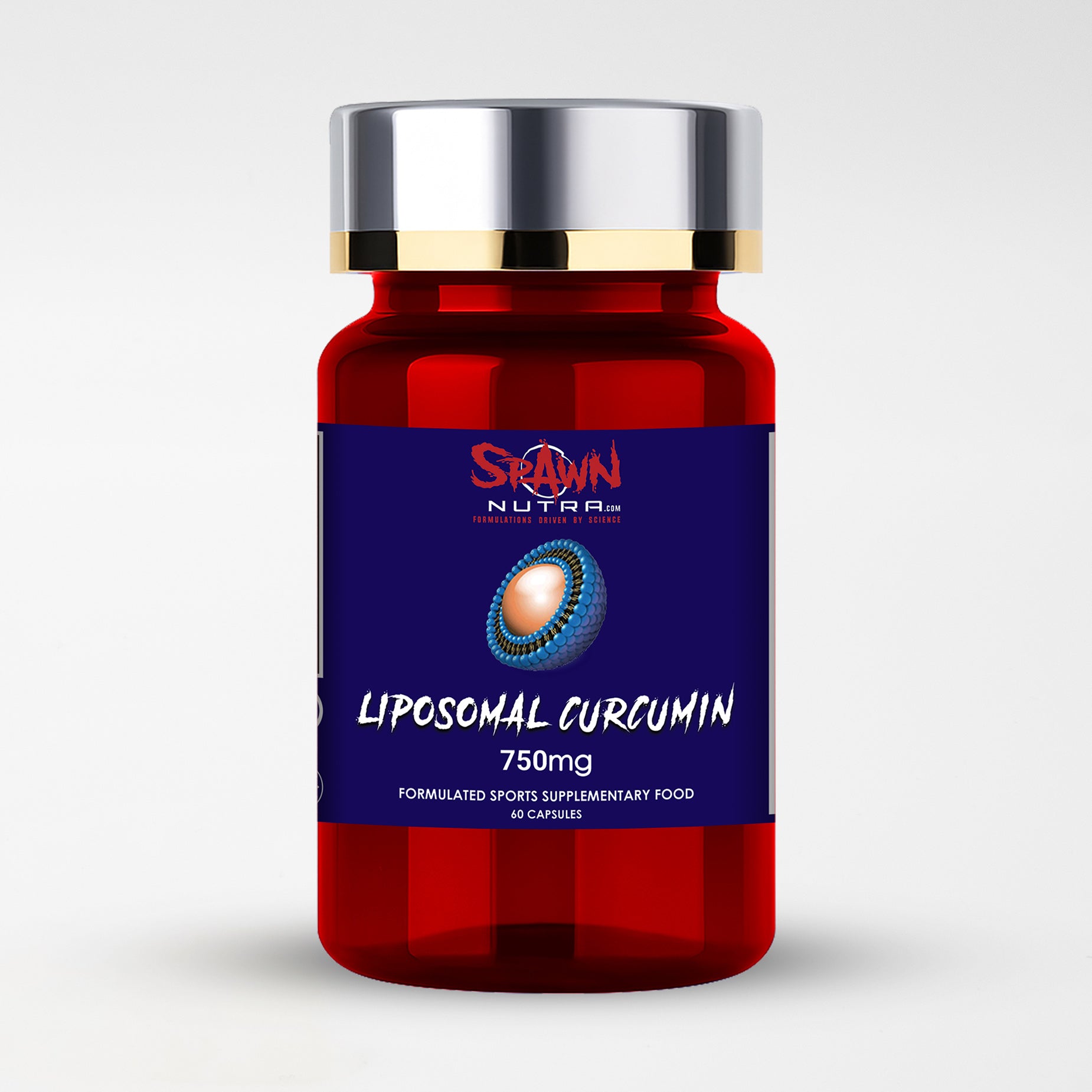
Liposomal CoQ10 500mg Supplement
- Regular price
-
$60.00 - Regular price
-
- Sale price
-
$60.00
LIPOSOMAL COQ10 500MG
The Spark Plug. The Electron Carrier. The Antioxidant Your Mitochondria Make.
WHAT IS COQ10?
Coenzyme Q10, or ubiquinone (ubiquinol in its reduced form). CoQ10 is a fat-soluble quinone that is synthesised by every cell in the human body — the only coenzyme that is endogenously produced AND available as a supplement. Its biological roles are irreplaceable: it is the electron carrier in the mitochondrial electron transport chain, shuttling electrons from Complex I and Complex II to Complex III, enabling the proton gradient that drives ATP synthase. Without adequate CoQ10, electron transport stalls and ATP production drops — regardless of how much NAD+, substrate, or oxygen is available.
Beyond its role in energy production, ubiquinol (the reduced form of CoQ10) is one of the most potent lipid-soluble antioxidants in human biology. It is the primary antioxidant in the inner mitochondrial membrane — where reactive oxygen species (ROS) are generated at highest concentration — and in low-density lipoprotein particles in circulation, where it prevents oxidative modification that initiates atherosclerosis.
CoQ10 biosynthesis requires the mevalonate pathway — the same pathway used to synthesise cholesterol. This is why statin drugs, which inhibit HMG-CoA reductase (a rate-limiting enzyme in the mevalonate pathway), reduce endogenous CoQ10 synthesis as a secondary effect. For anyone on statin therapy, CoQ10 depletion is a pharmacological certainty, not a theoretical risk.
THE MOLECULAR MECHANISMS
Complex I–III Electron Transport
CoQ10 accepts two electrons from NADH:ubiquinone oxidoreductase (Complex I) and FADH2-linked succinate dehydrogenase (Complex II), becoming ubiquinol (QH2). Ubiquinol then donates these electrons to Complex III (ubiquinol:cytochrome c oxidoreductase) in what is called the Q cycle, regenerating ubiquinone and pumping protons across the inner mitochondrial membrane. The magnitude of this proton gradient directly determines ATP synthase output. CoQ10 deficiency creates a bottleneck at this junction — an electron traffic jam that reduces ATP production and increases upstream electron leak, generating superoxide as a toxic byproduct.
Mitochondrial Membrane Integrity
CoQ10 is a structural component of the inner mitochondrial membrane, not merely a functional one. Its amphipathic structure — hydrophilic quinone head group, hydrophobic isoprenoid tail — allows it to partition into the lipid bilayer and move laterally, collecting electrons from one complex and delivering them to another. At inadequate concentrations, this lateral diffusion is impaired, and the efficiency of the electron transport chain decreases below any threshold that supplementing NAD+ precursors alone can compensate for.
Antioxidant Recycling Network
Ubiquinol regenerates Vitamin E (alpha-tocopherol) from its oxidised radical form (tocopheroxyl radical) — a reaction that prevents the propagation of lipid peroxidation chains in cell membranes. CoQ10 is also reduced back to ubiquinol by NADH and NADPH-dependent reductases. This means CoQ10 participates in a cellular antioxidant recycling network that also involves Vitamin C, Vitamin E, and glutathione — each regenerating the others. Depleting any single node in this network reduces the capacity of the entire system.
Cardiac Function
The heart has the highest CoQ10 concentration of any tissue in the body — reflecting its relentless ATP demand. Cardiac mitochondria are so densely packed that they constitute approximately 30% of cardiomyocyte volume. CoQ10 deficiency in cardiac tissue is associated with reduced contractile force, impaired diastolic relaxation, and elevated markers of oxidative stress in cardiac mitochondria. Multiple randomised controlled trials — including the Q-SYMBIO trial — have demonstrated significant improvements in major adverse cardiovascular events, hospitalisation, and cardiovascular mortality with CoQ10 supplementation in heart failure patients.
WHY STANDARD ORAL COQ10 IS LARGELY WASTED
CoQ10 has an MW of 863 Da and is extremely lipophilic — it does not dissolve in water at all. Standard powder capsules or tablets deliver CoQ10 in a form that requires micellisation with bile salts before any GI absorption can occur. This process is inefficient and highly variable. Standard CoQ10 oral bioavailability: 2–10%. Oil-based softgels improve this to approximately 20–30% through pre-solubilisation. Ubiquinol formulations offer approximately 3× improvement over ubiquinone, but even the best conventional softgel reaches only ~40% absorption with significant inter-individual variability based on bile acid production and intestinal fat absorption capacity.
THE LIPOSOMAL ADVANTAGE
|
Standard CoQ10 Powder (Capsule/Tablet) |
2–10% — extremely poor. Requires bile salt micellisation. Highly variable absorption. |
|
CoQ10 Oil-Based Softgel |
~20–30% — improved but still majority wasted. |
|
Ubiquinol Softgel (Best Standard Option) |
~35–45% — 3× ubiquinone, but still inconsistent and fat-meal dependent. |
|
Spawn Nutra Liposomal CoQ10 500mg |
~72–82% bioavailability. Phospholipid bilayer encapsulation pre-solubilises CoQ10 in a form that bypasses bile salt micellisation entirely. Liposomal nanovesicles are the same size and structural format as the body's own absorption machinery. Peak plasma CoQ10 is independent of dietary fat intake — consistent, predictable, repeatable. |
At 500mg per serving with 72–82% absorption, Spawn Nutra Liposomal CoQ10 delivers more functionally available CoQ10 per dose than 2500mg of standard softgel CoQ10. The maths are not subtle.
MAD SCIENTIST 5150 — FORMULATE TO DESTROY
Every cell in your body makes CoQ10. Every aging body makes less. Every person on statins has pharmacologically depleted it. Spawn Nutra Liposomal CoQ10 500mg replaces what time and medication take away — at 72% bioavailability, not the industry standard 10%.
Shipping information
- No EU import duties.
- Ships within 1-2 business days.
- Ships in our fully recyclable and biodegradable signature boxes.
Couldn't load pickup availability